
Ad
Skin cancer
Application to facilitate skin self-examination and early detection. read more.
Introduction
Although the eyelids can be involved with many skin conditions, the most common are listed here.
Skin lesions
Painless and stable solitary lesions
-
Mole (melanocytic nevus), including congenital melanocytic nevus
- Seborrheic keratosis
- Freckles and brown marks
- Chalazion (lipogranulomatous inflammation of the Zeis sebaceous gland at the base of the eyelash, or meibomian gland on the inner aspect of the cap; due to occlusion) – a firm, painless swelling
-
Salmon patch (angel kiss)
- Suderiferous cyst (transparent papule containing clear fluid)
- Other types of cysts
- Trichoepithelioma
Solitary painless lesions stable and without eyelids
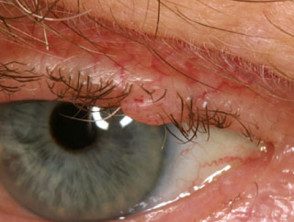
Dermal nevus
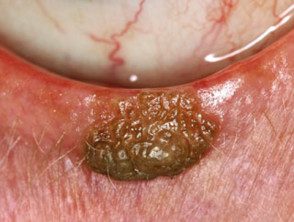
Seborrheic keratosis
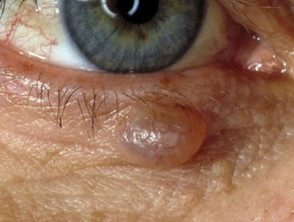
Suderiferous cyst
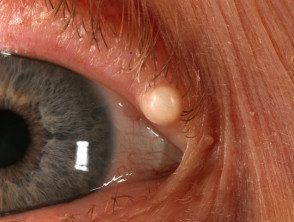
Zeiss cyst
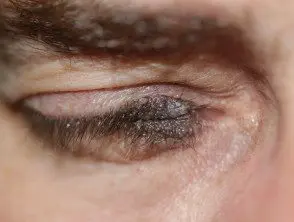
kissing naevus
Growth of solitary lesions
Skin cancers progressively enlarge.
- Basal cell carcinoma
- Actinic keratosis
- Intraepidermal carcinoma
- Scaly cell carcinoma
- Keratoacanthoma
- Atypical fibroxanthoma
- Sebaceous carcinoma
- Melanoma
eyelid skin cancer
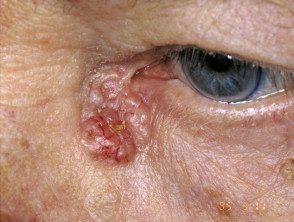
Basal cell carcinoma
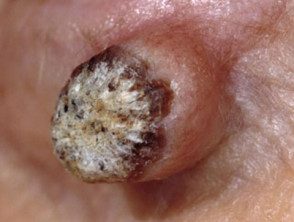
Keratoacanthoma
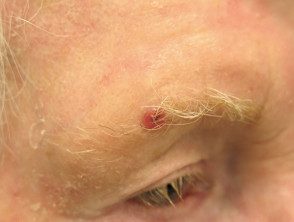
Atypical fibroxanthoma
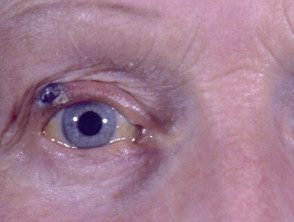
Melanoma
Multiple injuries
- Skin tags
- Actinic keratosis
- Xantelasma palpebrum
- Syringoma
- Cysts
- Milia
- Moniliform blepharrhosis in lipoid proteinosis (extremely rare)
Eyelid injuries.
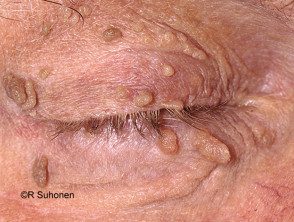
Skin tags
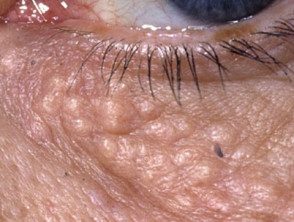
Syringomas
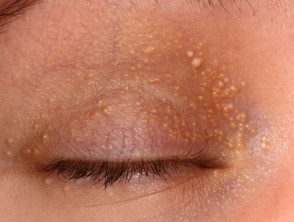
Milia
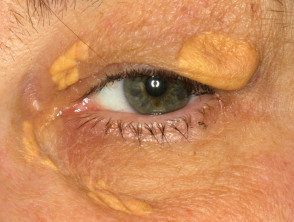
Xanthelasma
Infections that affect the eyelids.
Bacterial skin infections
- External hordeola (sty, infection from the tab follicle, usually caused by staphylococcus bacteria )
- Internal hordeola (meibomian gland infection)
- Bacterial conjunctivitis
- Erysipelas or preseptal or orbital cellulitis (infections of the tissues around the eye), which is often due to the spread of the infection to the sinuses (responsible for orbital cellulitis), respiratory tract, impetigo, abscesses, traumaor insect bites
Bacterial eyelid infection
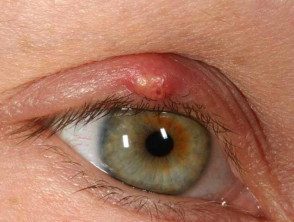
External hordeolum
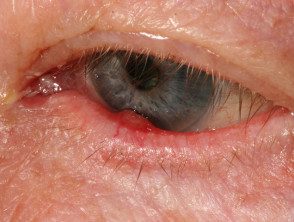
Internal hordeolum
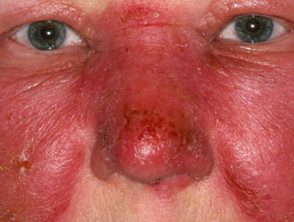
Erysipelas
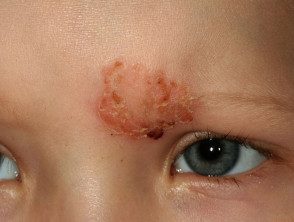
Impetigo
Viral skin infections
- viral conjunctivitis
-
Herpes simplex (caused by the cold sore virus)
-
Herpes zoster ophthalmicus (shingles, caused by the chickenpox virus)
- Viral warts
- Molluscum contagiosum
Viral eyelid infections
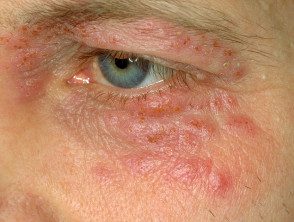
Herpes Simplex
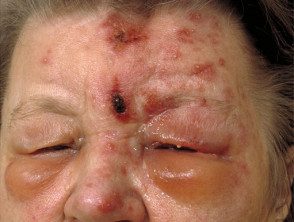
Herpes infection
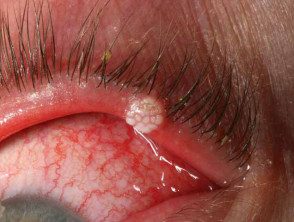
Viral wart
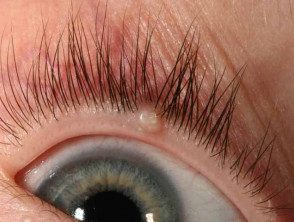
Molluscum contagiosum
Fungal skin infections
- Tinea faciei
- Kerion
Infestation
-
Demodex Pinch eyelash infestation
- Pediculosis pubis (pthiriasis), also called crabs or pubic lice
Fungal infections of the eyelids
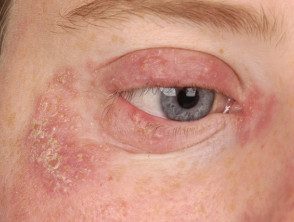
Tinea faciei
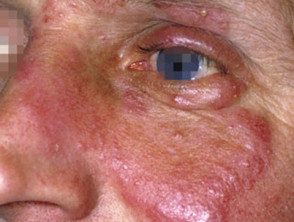
Tinea faciei
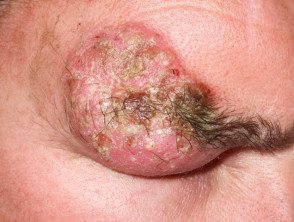
Kerion
Inflammatory skin conditions that affect the eyelids
Dry itchy patches
- Blepharitis
- Atopic dermatitis
- Allergic conjunctivitis and keratoconjunctivitis
-
Contact dermatitis, including irritating and allergic contact dermatitis
- Seborrheic dermatitis
- Psoriasis
eyelid dermatitis
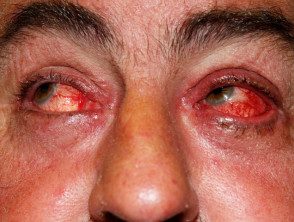
Infected eczema
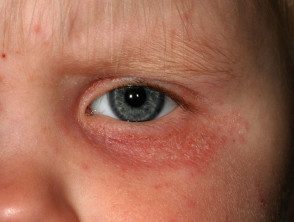
Atopic eczema
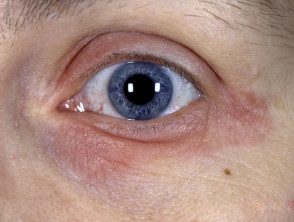
Contact dermatitis
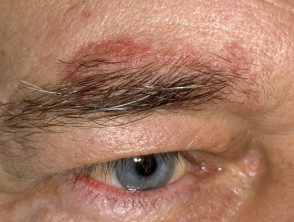
Seborrheic dermatitis
Dry itchy patches
- Discoid lupus erythematosus
- Psoriasis
Dry eyelids
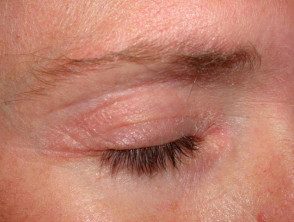
Psoriasis
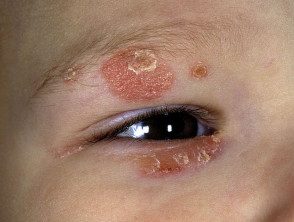
Psoriasis
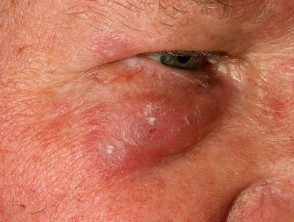
Discoid lupus
Papules and pustules
- Ocular rosacea
- Blepharitis
- Periorificial dermatitis
- Acne agminata
Acne vulgaris tends to avoid the eyelids.
Papules and pustules of the eyelids.
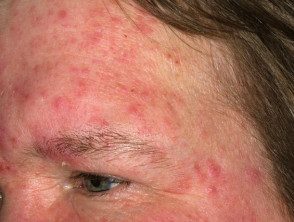
Rosacea
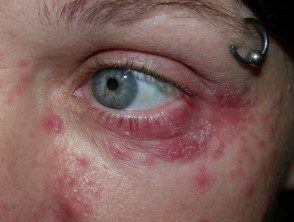
Periocular/perorificial dermatitis
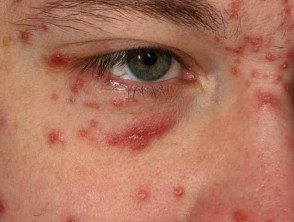
Acne agminata
Blisters and erosions
- Stevens Johnson syndrome – toxic epidermal necrolysis
- Cicatricial pemphigoid
- Pemphigus vulgaris
- Erosive lichen planus
Eyelid erosions
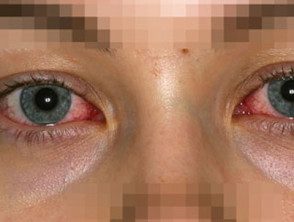
Stevens Johnson syndrome
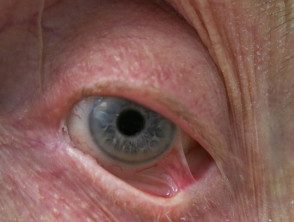
Cicatricial pemphigoid
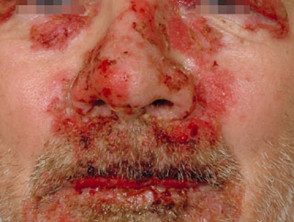
Pemphigus
Swelling
- Contact dermatitis
- Atopic dermatitis/eczema
- Blepharitis
- Photosensitive contact dermatitis (usually avoids folds and upper eyelids), including drug-related photosensitization
- Angioedema or urticaria
- Rosacea
- Orofacial granulomatosis
- Sinusitis
- Conjunctivitis
- Injuries including swelling after surgery or cryotherapy
- Ascher syndrome
Systemic Disorders can mimic eyelid disease by causing swelling or redness of the eyelid:
- Dermatomyositis
- Myxedema
- Thyroid eye disease
- Superior obstruction of the vena cava
- Sjogren's syndrome
- Granulomatosis with polyangiitis
- Churg-Strauss vasculitis
- Amyloidosis
- IgG4-related disease
- Orbital and ocular lymphoid hyperplasia
- Orbital attached lymphoma
- Idiopathic orbital inflammatory disease
Eyelid swelling
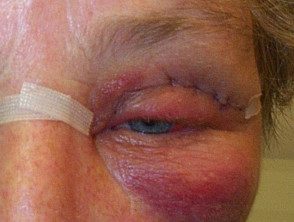
Postoperative edema
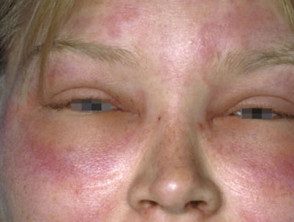
Angioedema
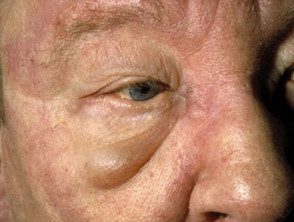
Dermatomyositis
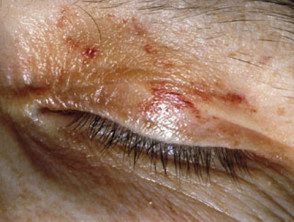
Amyloidosis
Dry and irritated eyes
- Keratoconjunctivitis sicca
Discoloration
- Dark circles under the eyes